Overview
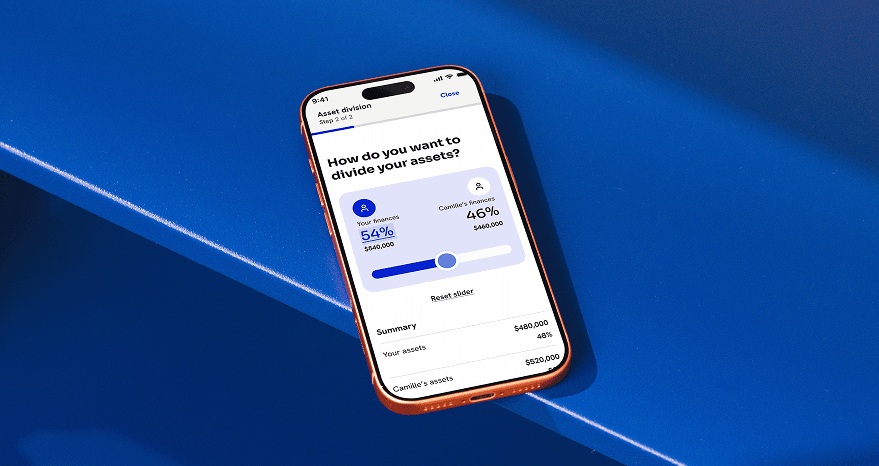
Civily is a platform for delivering guided legal services. The first service focused on family law, helping separating couples navigate decisions, reach agreements and prepare documentation for the courts.
We produced a platform and user-facing service that helps people independently navigate family law matters. It guides users through a structured sequence of steps, automatically generating the required legal agreements and supporting documentation. It's driven by a configurable backend that enables different courts and organisations to deliver tailored services without building separate applications.
I led the frontend and worked closely across product and design, shaping the interaction model and frontend architecture from the initial family-law experience through to the reusable platform underneath it.
Designing around progress, not paperwork
The most immediate user need was clarity. People needed to understand the overall process, and then at every stage, what information was required, why it mattered and what would happen next.
We designed the product around a sequence of decisions. The interface presents one manageable task at a time while maintaining visibility of overall progress. All stages are explained in context and in plain language. Answers are progressively assembled by the application into formal statements, financial records, parenting arrangements and agreements.
The dashboard was designed around the question "what do I need to do next?". This reduced cognitive load without hiding the overall process, allowing users to orient themselves as they progressed through an otherwise unfamiliar system.
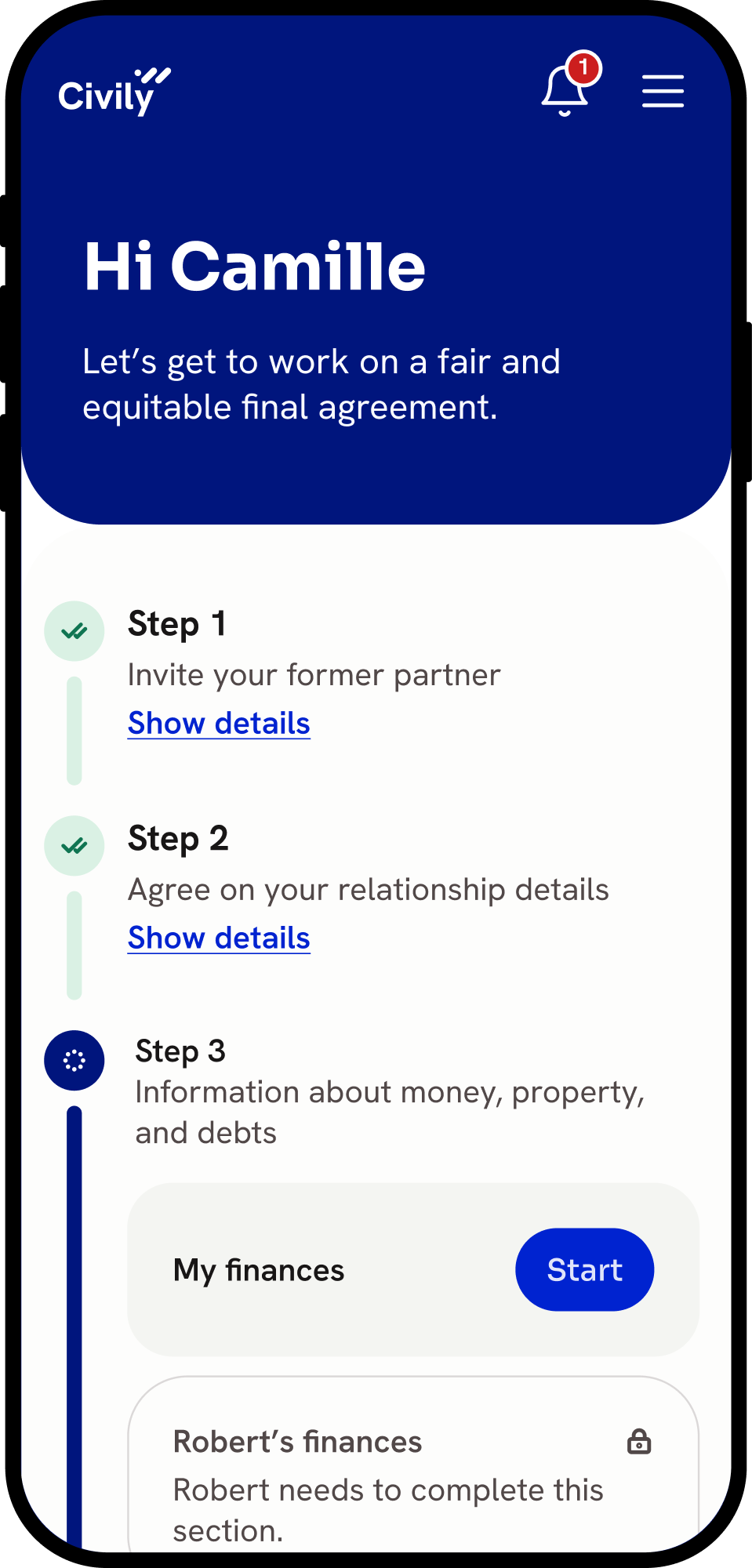
Workflows appear as steps on a dashboard, giving a high-level view of the whole process.
Collaboration had to work without assuming cooperation
Most collaborative software assumes people are working together. Civily deals with disputes, so the product could not be built on that assumption. We treated collaboration as a structured exchange, rather than shared editing.
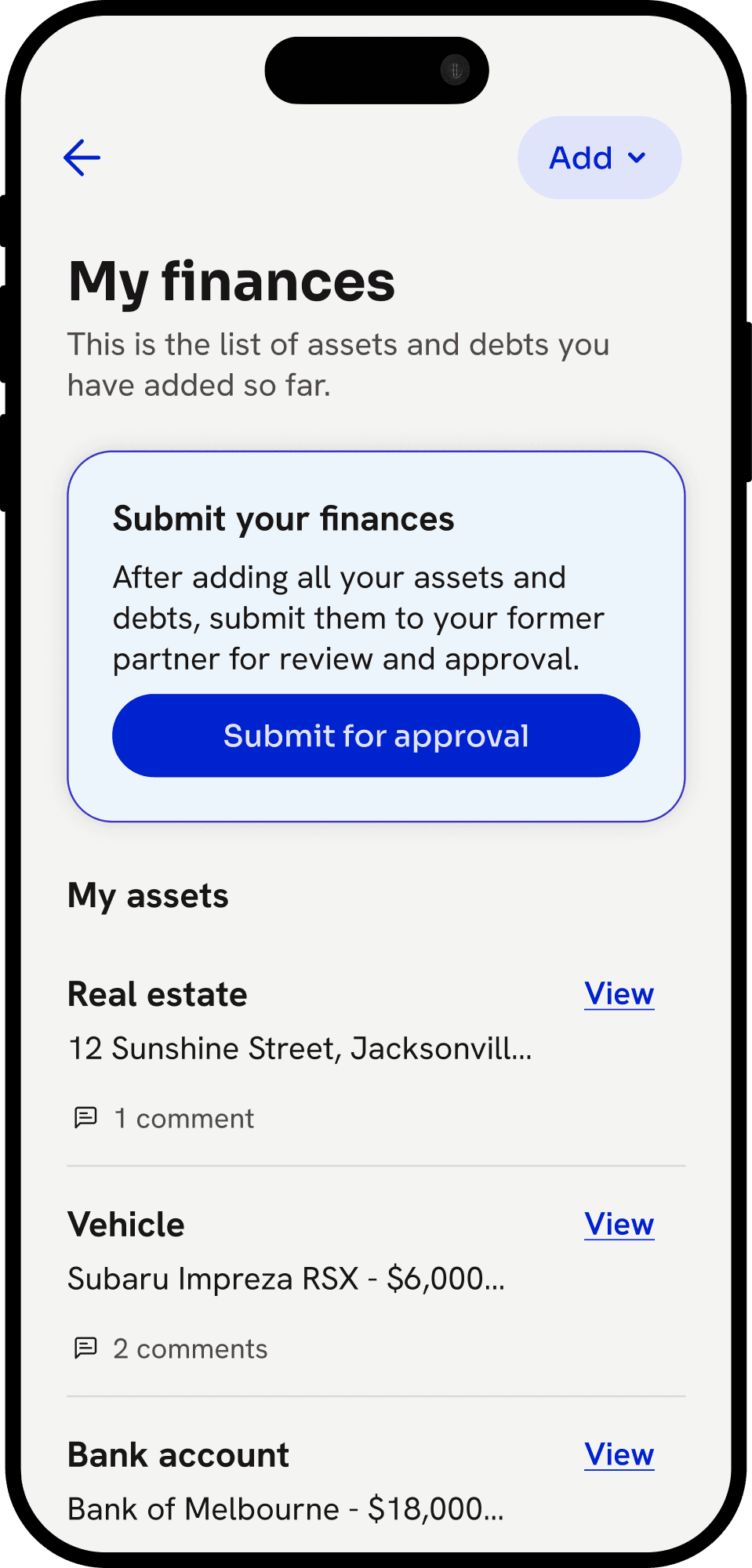
One person can begin independently and invite the other when ready. Each participant has a private login and can complete their parts asynchronously. The system records what has been proposed, reviewed and approved, while notifications, reminders and status updates help prevent the process from silently stalling.
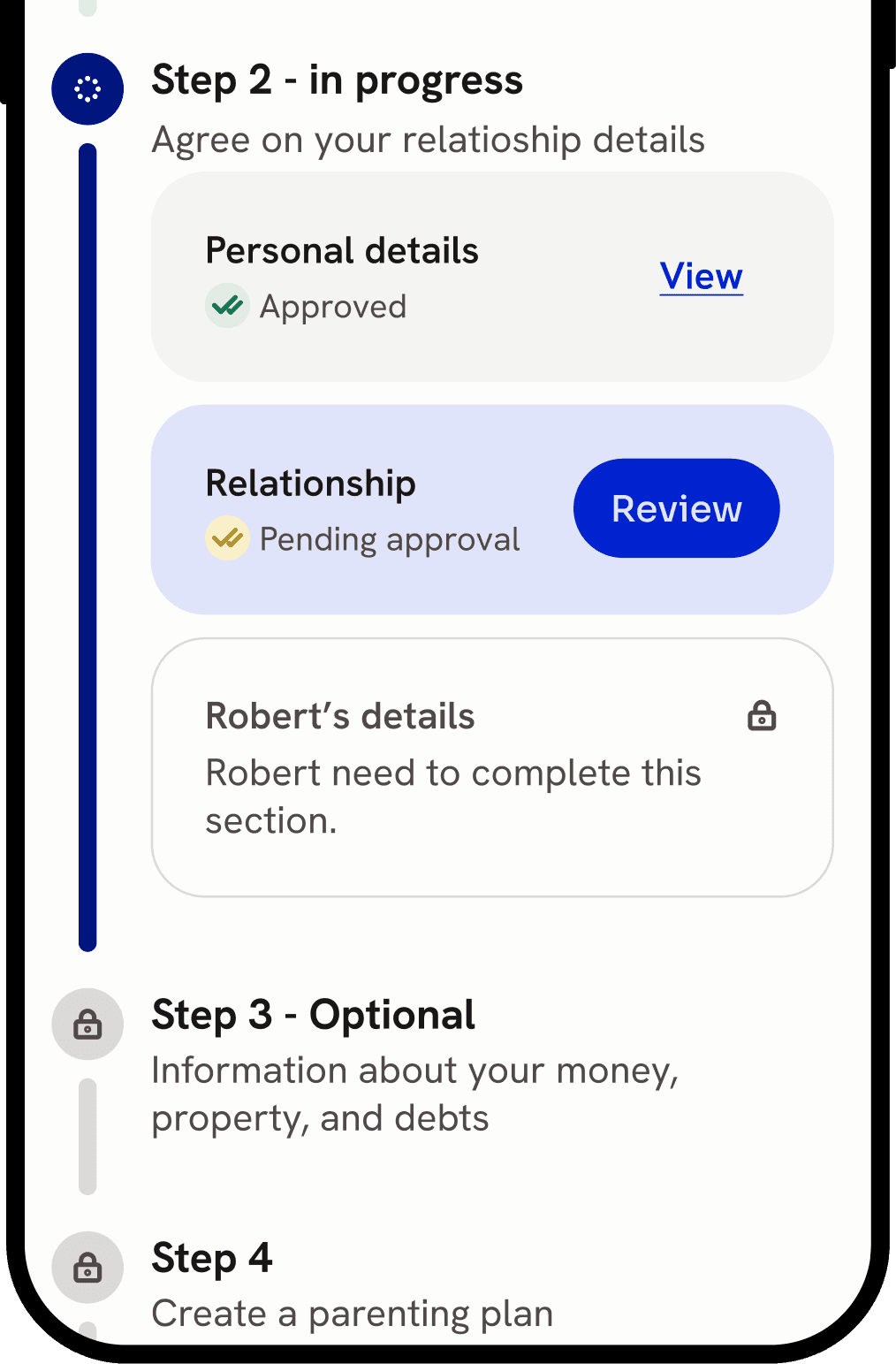
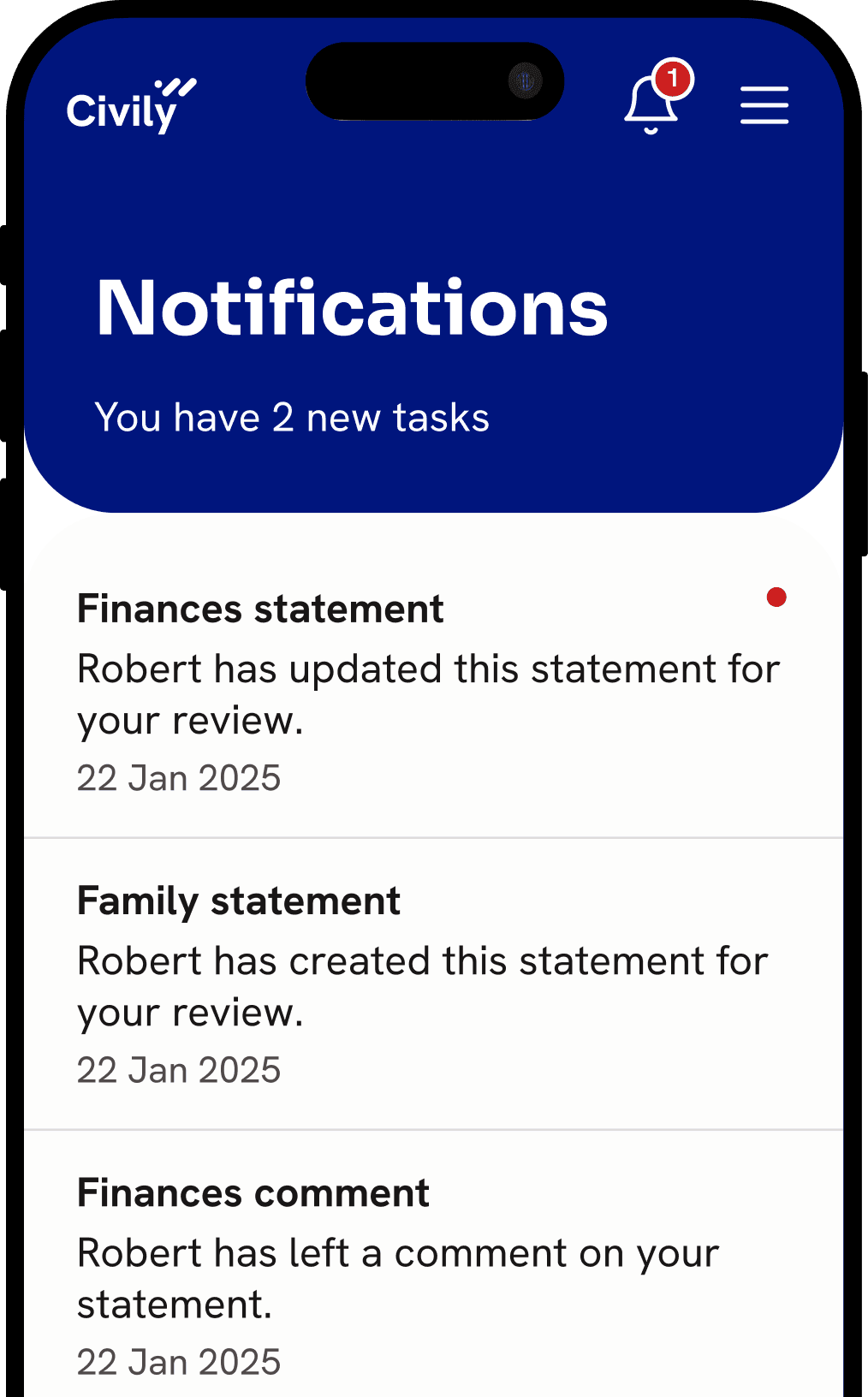
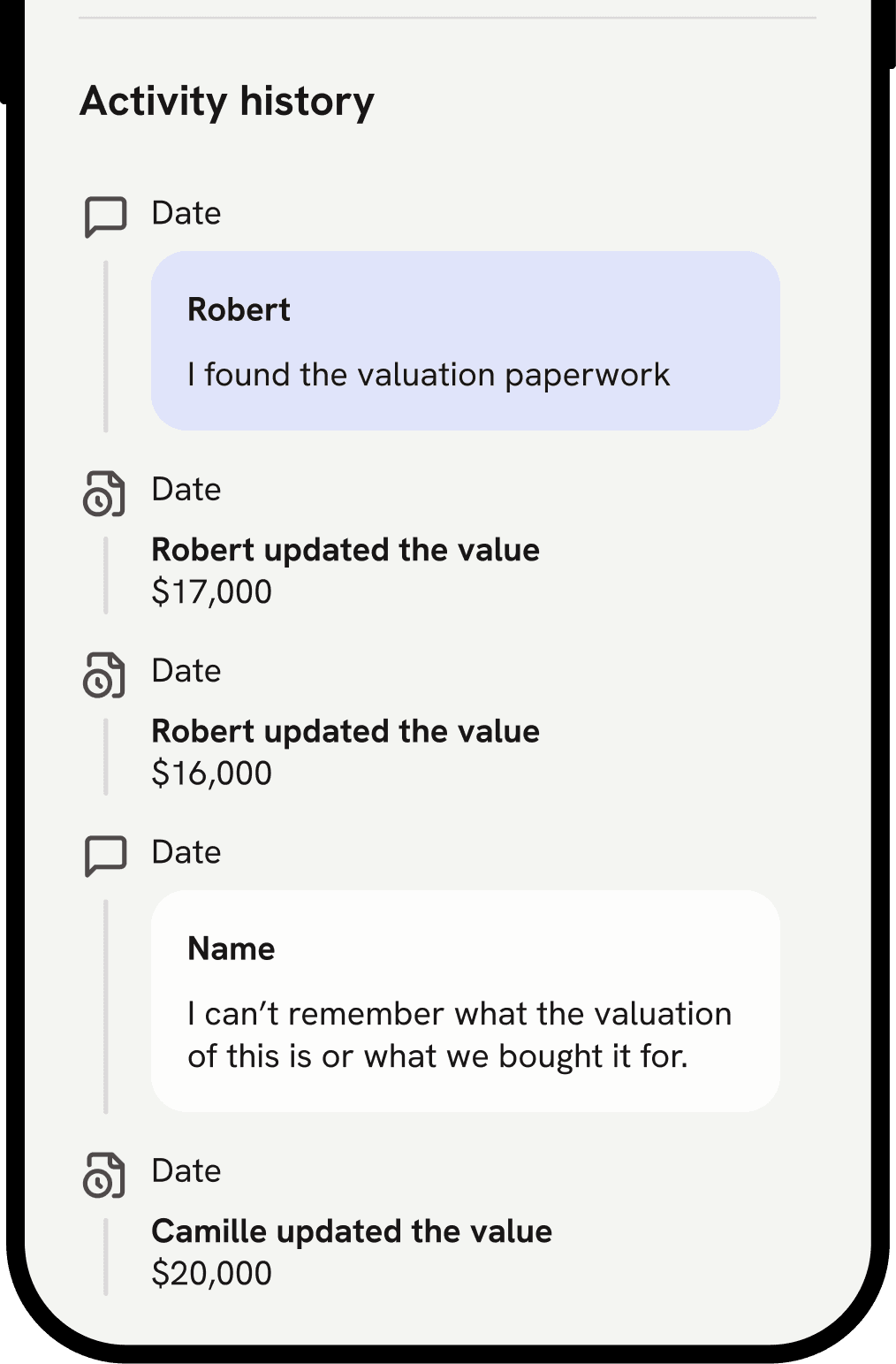
Each stage is completed by one person, then reviewed and approved by the others. The dashboard shows every stage's status and unlocks them as the matter progresses.
Structured inputs create better outcomes
Allowing users to describe their circumstances in free text would have been quick to implement and very flexible. However, it would have also shifted the burden of interpretation onto both the user and the professionals reviewing the matter.
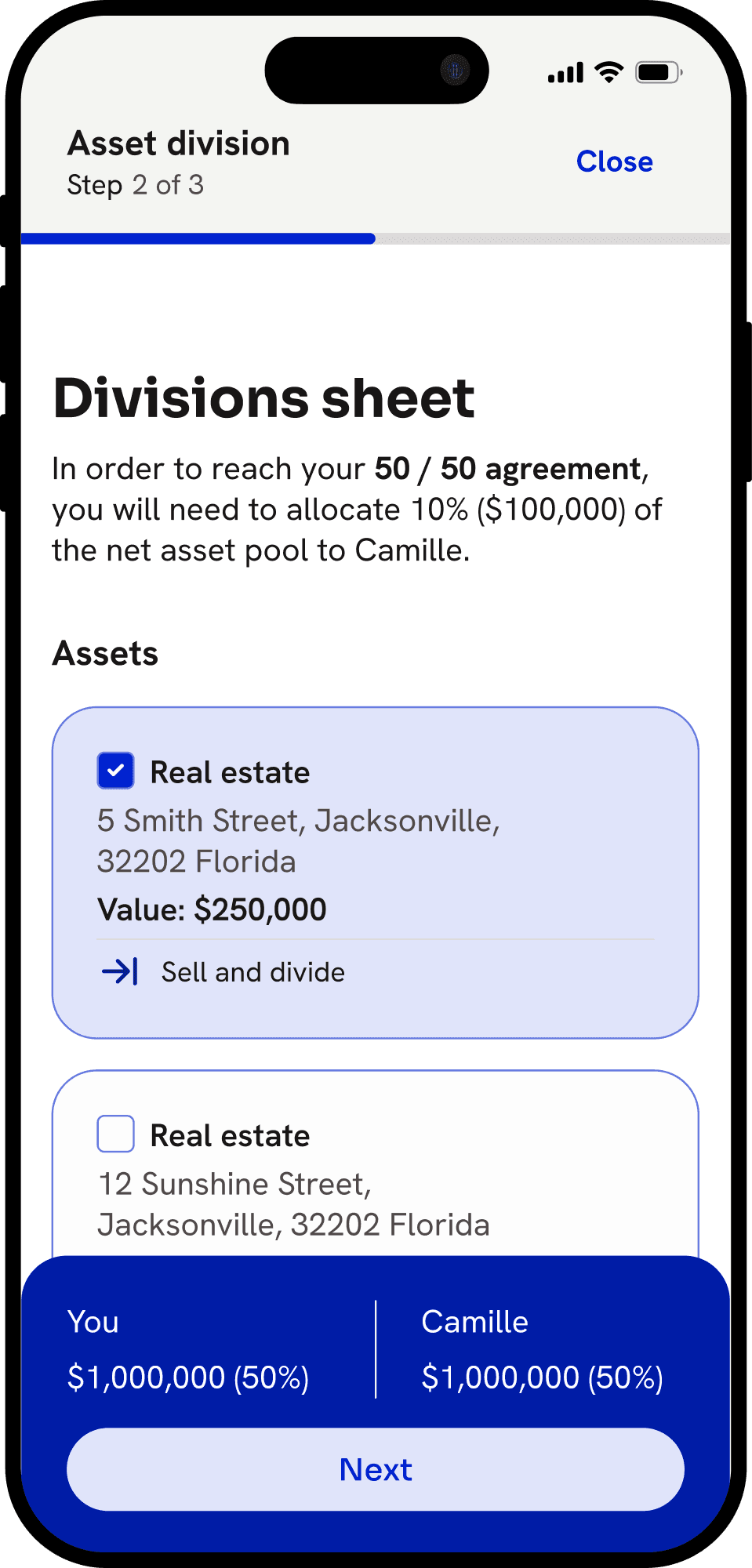
Instead, we designed structured interactions designed for each information type.
The custom structured input improved comprehension, reduced omissions and enabled reliable document generation from the same underlying information.
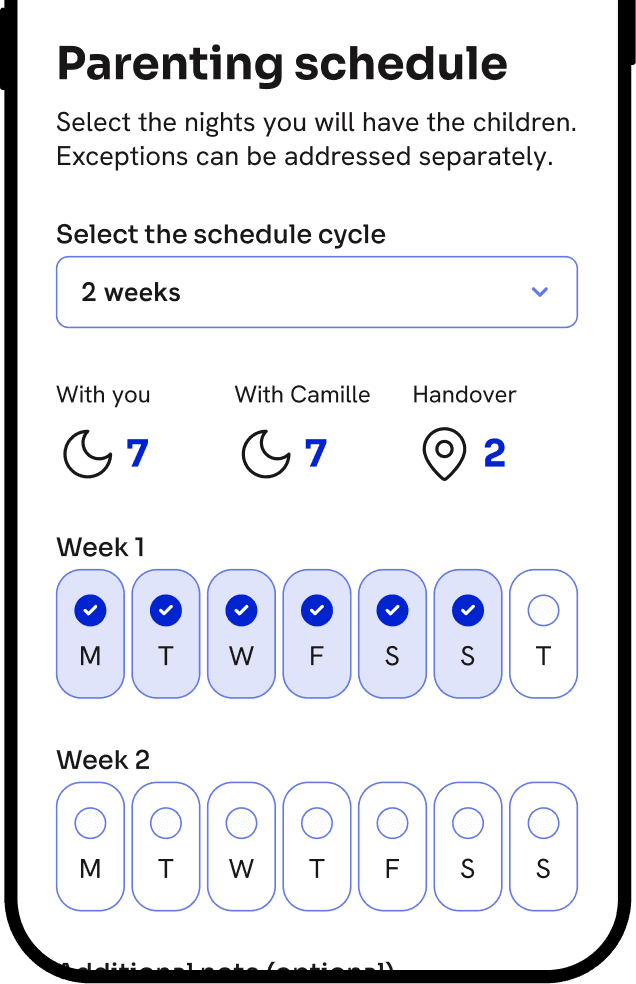
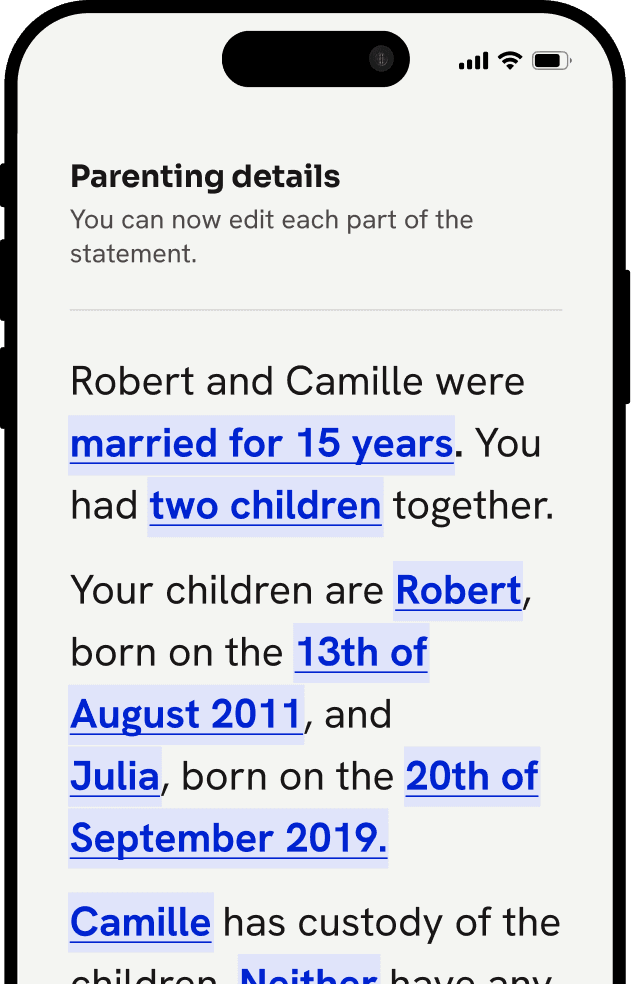
Parenting arrangements are broken into concrete decisions around schedules and responsibilities.
Building a platform instead of a single product
Our research had shown that the same broad interaction patterns recur across family law, mediation and court processes. People provide facts, make proposals, review another party’s input and produce formal documents. However, the precise content, terminology, eligibility rules and submission requirements differ substantially.
Rather than treating every legal service as a separate product, we identified the underlying interaction patterns they shared. The platform became a composition of reusable workflows, with legal content, business rules and document generation supplied through configuration. This meant the product could evolve as a platform instead of fragmenting into multiple bespoke applications.
Supporting a new legal service became a matter of configuration rather than building another application, allowing improvements to benefit every implementation while preserving local legal requirements.
Outcome
The project delivered a working proof of concept platform. The team is now working closely with legal professionals, mediators and courts to refine the product through real-world feedback. The platform provided a strong foundation for expanding into additional legal services, while ongoing user research helped shape how workflows, guidance and document generation could continue to evolve.